
Selecting your wedding menu is one of the most enjoyable aspects of wedding planning. A professional food tasting allows you to evaluate your caterer’s culinary capabilities, refine your menu selections, and ensure your guests enjoy a memorable dining experience. Since food is central to your reception, attending your tasting well-prepared allows you to make confident decisions that align with your vision and budget.
Why a Wedding Food Tasting Matters
A food tasting serves multiple important purposes beyond simply sampling delicious dishes. The experience provides insight into food quality, flavour profiles, and ingredient freshness. You can evaluate how each component of your menu comes together and whether portion sizes meet your expectations.
Presentation significantly influences the ambiance of your reception. A tasting allows you to see how your caterer plates dishes and handles visual presentation. You also gain an understanding of how presentation may adapt when serving larger groups compared to tasting portions.
The tasting is also an opportunity to customize your menu. You can request adjustments to seasoning levels, portion sizes, plating styles, and ingredient preferences. Your caterer can present gluten-free, vegan, dairy-free, and allergy-sensitive alternatives, ensuring all your guests are properly accommodated. This is also when you’ll observe how the team handles plating, manages timing, and coordinates large-scale service delivery, giving you insight into what to expect on your wedding day.
Timing and Cost Considerations
Most wedding professionals recommend scheduling your tasting six to nine months before your wedding. This timeline provides adequate opportunity for menu revisions and allows your caterer to source seasonal ingredients and plan staffing accordingly.
Complimentary tastings are typically offered to couples who have already booked catering services. If you’re exploring caterers before making a booking decision, expect to pay a tasting fee, which is usually applied toward your catering contract once you decide to book.
Preparing for Your Tasting Appointment
Proper preparation ensures a productive and enjoyable experience. Before your appointment, review sample menus provided by your caterer to identify dishes that appeal to you. This focused approach allows your caterer to prepare relevant samples rather than overwhelming you with endless options.
Communicate any dietary needs, cultural food traditions, or specific ingredient preferences to your caterer in advance. This advance notice enables them to prepare suitable alternatives and demonstrate their ability to accommodate your requirements. It also helps to discuss your wedding theme and style preferences, as whether your celebration is modern, rustic, traditional, or culturally inspired influences the flavour profiles and plating styles that will complement your aesthetic.
Confirm your overall catering budget before the tasting as well. Understanding your financial parameters helps you and your caterer identify menu options that deliver excellent value and align with your spending limits.
Who Should Attend Your Tasting
Most wedding caterers recommend limiting attendance to the couple and one or two trusted guests. Too many people create conflicting opinions that complicate decision-making and make the experience less productive. Consider bringing your wedding partner, a wedding planner or coordinator, and perhaps one trusted family member whose opinion you value.
Bring a notebook to record your thoughts and preferences as you go. Taking photos of plated dishes helps you compare options later and recall specific presentations you preferred. These notes become invaluable when making final menu selections weeks after the tasting concludes.
What Your Tasting Will Include
Your caterer will present a curated selection of potential menu items. This typically includes appetizers or canapés, main courses, accompanying sides, desserts, and optional late-night bites or specialty snacks. Depending on your preferences, beverage and wine pairings may be included so you can evaluate how drinks complement your food selections.
You will observe portion sizes and overall presentation, including garnish choices and colour balance. This visual assessment helps you understand how your finished dishes will appear when served to your guests. Ask your caterer how presentation adjusts when plating larger quantities for your reception, since sometimes dishes look different when scaled up.
During the tasting, evaluate the balance of flavours, temperature consistency, cooking technique, seasoning levels, and ingredient quality. This is your opportunity to request adjustments to spice levels, sauce options, side dishes, or any other component. Your caterer may also walk you through service flow, food preparation timelines, and how their approach differs for buffet versus plated service, giving you valuable insight into staffing requirements and how they accommodate late changes or additional guests.
Important Questions to Ask
Before your appointment, prepare questions to clarify critical details. Understand how dishes will be prepared and maintained fresh during service, and confirm the exact portion size for each course. Ask about their approach to ingredient sourcing, quality control, and whether they can accommodate specific customisations or incorporate dishes from particular cuisines.
Clarify their approach to dietary restrictions and allergies, and ask how staffing differs between plated versus buffet service. Identify any additional fees beyond the base catering price, such as service charges, equipment rentals, or cake cutting fees. Confirm deadlines for finalizing guest counts and understand how they handle changes to final numbers.
Exploring Different Service Styles
Your tasting provides an ideal opportunity to discuss different service approaches and understand how each affects your reception.
Plated Service
Plated service delivers formal, elegant dining with structured timing and refined presentation. This approach offers excellent portion control and visual presentation, though it requires more staff and increases costs. This option works well for traditional and formal weddings where elegance and precision are priorities.
Buffet Style Service
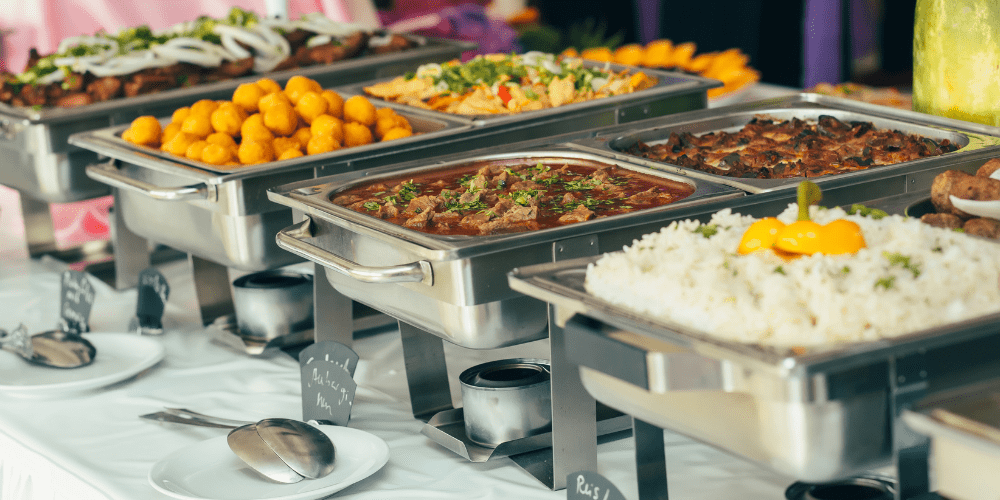
Buffet style offers a more casual approach that proves budget-friendly while providing variety and guest flexibility. It requires fewer staff members, making it ideal for large weddings. Guests can move around and serve themselves at their own pace, which many find more comfortable and interactive.
Family-Style Service
Family-style service encourages conversation through a communal dining experience where dishes are shared among guests at each table. This approach creates a personal, connected atmosphere and reduces food waste through controlled portioning. It’s becoming increasingly popular because it feels warm and inclusive while still maintaining an organized service flow.
Cocktail-Style Service
Cocktail-style service features canapés and small bites instead of a full meal, creating a modern, social atmosphere ideal for shorter events or entertainment-focused celebrations. This approach is budget-friendly and requires minimal formal structure, making it perfect if you want your reception to emphasize socializing and dancing over a traditional sit-down meal.
Your caterer can explain how each service style affects overall costs, staffing requirements, and reception timeline, helping you select an approach that matches both your vision and your operational needs.
Providing Feedback and Making Adjustments
After sampling all offerings, your caterer will ask for your feedback. This is your opportunity to refine every detail. You can discuss adjusting flavour profiles and seasoning, swapping sides or garnishes, incorporating cultural dishes that reflect your heritage, modifying plating and presentation, adjusting portion sizes, and ensuring dietary-friendly alternatives meet your standards.
Be honest about what works and what doesn’t. If a sauce feels too heavy, say so. If you want more vegetables or a different texture, speak up. Your caterer wants to create a menu you’re genuinely excited about, and this feedback is essential to achieving that goal.
Making the Most of Your Experience
Eat lightly before your appointment so your palate remains fresh throughout the tasting. Keep your wedding theme and aesthetic in mind when evaluating presentation styles to ensure alignment with your overall vision. Balance personal favourites with crowd-pleaser options that appeal broadly to your guests, and consider your guest composition, especially those with dietary restrictions or strong preferences.
Remain open to new flavours and creative preparations your caterer suggests. Professional caterers often introduce creative dishes that become reception highlights. Your caterer’s expertise can enhance your menu beyond what you originally imagined, so approach the experience with curiosity and trust in their culinary knowledge.
Common Mistakes to Avoid
Bringing too many people to the tasting often leads to conflicting opinions that complicate decision-making. Make sure dietary restrictions receive proper attention throughout your planning process, and evaluate both flavour and presentation equally rather than focusing exclusively on taste.
Ask sufficient questions to clarify all details rather than assuming understanding. Consider seasonal appropriateness when selecting dishes, since hot versus cold options may depend on your wedding season and whether your reception is outdoors or indoors. Don’t overlook drink pairings that can enhance your menu, and make final menu decisions only after reviewing your updated budget to ensure selections remain within your financial parameters.
Finalizing Your Menu
Once your tasting concludes, take important steps to lock in your selections. Finalize your chosen dishes in writing and confirm all dietary requirements with your caterer. Review updated pricing based on your final selections and clarify your selected service style and required staffing numbers.
Formally approve your final menu and reception timeline, and understand payment schedules, deadlines, and any final submission requirements. Since tastings typically occur weeks or months before your wedding, early completion gives your caterer adequate time to plan sourcing, staffing, and preparation.
Conclusion
Your wedding food tasting is a significant step in creating a memorable reception. By preparing thoroughly, asking thoughtful questions, and prioritizing your guests’ needs, you ensure that your reception meal will be a highlight of your celebration.
When selecting your caterer, consider experienced professionals like Momo Dumpling who bring specialized culinary expertise and cultural authenticity to wedding celebrations. With effective planning and clear communication, your tasting becomes an enjoyable milestone that sets the foundation for an unforgettable celebration.