Planning an event means juggling countless details, and catering logistics can feel overwhelming. Managing catering logistics effectively is what separates a stressful event from a successful event. When food service, equipment, staff, and timing all work together seamlessly, your guests enjoy delicious meals without noticing the careful coordination happening behind the scenes.
This guide walks you through the essential elements of catering logistics and event setup so you can create memorable experiences for your guests.
What Are Catering Logistics?
Catering logistics refers to all the planning and coordination needed to deliver fresh food and quality service at your event location. This includes preparing meals, transporting them safely, setting up serving stations, coordinating staff, and managing the flow of service.
Unlike restaurants, where everything happens in one controlled space, event logistics require moving food, equipment, and catering staff to different venues. Each location has unique requirements, and careful planning ensures everything runs smoothly.
When these operational elements come together properly, guests enjoy their meals without delays, cold food, or service disruptions.
Planning Your Catering Logistics
Good logistics planning starts well before event day. The more you plan ahead, the smoother everything runs when guests arrive.
Understanding Your Event Needs
Start by clarifying what your event requires. The guest count, type of occasion, and service style all shape your catering approach. A casual office lunch might work well with drop-off catering and self-service stations. A formal wedding reception may need plated service with attentive staff. A high-profile corporate event could call for passed appetizers that guests can enjoy while mingling.
Knowing these details helps you determine how much food to prepare, what equipment you’ll need, how many team members to schedule, and how much time setup will take.
Building Your Event Timeline
A detailed event timeline keeps everyone on track. Work backwards from when you plan to serve food, then schedule each task leading up to that moment.
Your timeline might include when to start food preparation, transportation logistics and delivery schedules, equipment arrival and setup, staff arrival for pre-event briefings, and when service begins.
Build in extra time between tasks. Traffic delays, venue access issues, or small adjustments can happen. Buffer time ensures these don’t throw off your entire schedule.
Setting Your Budget
Know what you can spend on ingredients, catering staff, equipment rentals, transportation, and any venue fees. Tracking costs helps you make smart choices about menu planning and service style while staying within budget. Proper resource allocation ensures you have everything needed without overspending.
Getting Food to Your Event Safely
Transportation logistics properly maintain food quality and keep meals safe to eat.
Planning Your Delivery
Schedule delivery so food arrives fresh and ready when you need it. Organize your vehicle carefully to prevent spills or damage during transport. If you’re working in a busy area or coordinating with other vendors, plan your route to avoid delays.
Maintaining Food Safety and Quality
Food safety depends on proper temperature control. Hot dishes need to stay hot, and cold items must stay chilled during the entire journey from the kitchen to the venue.
Use insulated containers for hot foods, portable warmers to maintain serving temperature, refrigerated containers or coolers with ice packs for cold items, and temperature monitoring to ensure safety.
Food quality matters for guest satisfaction. Fresh dumplings, for example, taste best when they’re served at the right temperature with steaming hot, tender wrappers and flavorful fillings.
Packing Everything You Need
Create a detailed list of everything required for service. Serving utensils, presentation trays, plates and napkins, condiments and sauces, and decorative elements all need to be accounted for. Careful packing prevents breakage and makes setup faster because staff can easily find what they need.
Coordinating Equipment and Supplies
Events require specific equipment to serve food properly and create an appealing presentation.
Essential Equipment
Depending on your service style, you might need serving tables and buffet stations, warming trays or chafing dishes, cooking equipment if preparing items on-site, plates, utensils, and glassware, and table linens.
Make a checklist and verify that all proper equipment is ready before event day.
Renting vs. Owning Equipment
Some equipment makes sense to own if you use it regularly. Specialized equipment for specific event styles is more practical to rent. Rental companies provide quality items without the storage and maintenance costs. Inspect rental items when they arrive to confirm they’re clean and in good condition.
Planning Equipment Placement
Think through equipment placement during your planning stage. Knowing where each piece will go helps ensure adequate space for both guests and staff to move comfortably.
Setting Up Your Event Space
Venue layout affects both guest comfort and operational efficiency.
Walking Through the Venue
Visit the venue before your event to understand the space. This venue coordination helps you identify entry and exit points, areas suitable for food preparation or warming, power outlets for equipment, secure storage for supplies, and how tables and serving stations will fit.
This walkthrough helps you spot potential safety concerns or logistical issues before event day.
Designing the Layout
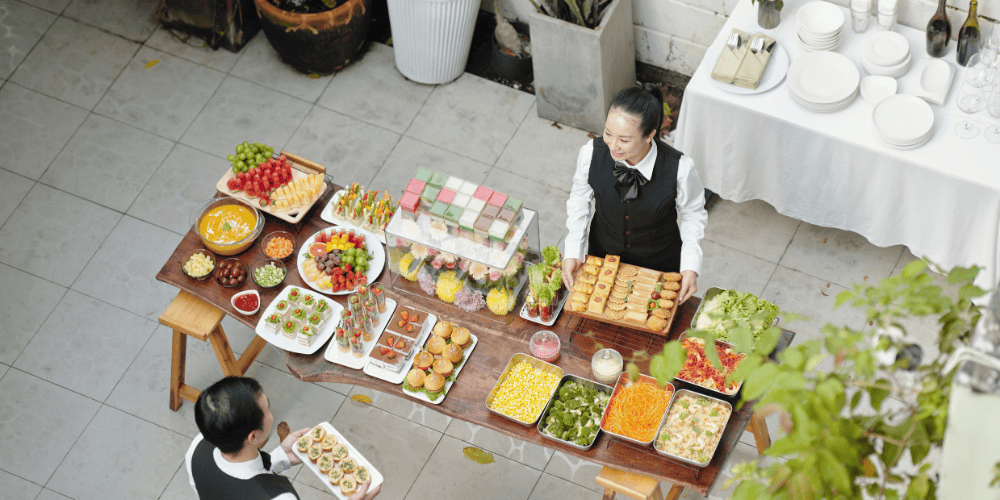
Arrange the space so guests can move comfortably while staff serve efficiently. Position serving stations to prevent bottlenecks and long lines. Place beverage stations where guests can access them without blocking main pathways. Plan seating arrangements that allow adequate space between dining tables for servers to move easily.
Good venue selection and layout planning improve both guest experience and service quality.
Balancing Presentation and Function
Decorative elements, lighting, and table settings should match the event’s theme while still allowing staff to do their jobs effectively. Beautiful food displays draw attention, but they also need to be accessible for guests and easy for catering staff to maintain throughout the event.
Managing Your Catering Team
Your catering team makes logistics work. Clear communication and defined roles keep everyone working together smoothly.
Assigning Clear Roles
Different team members handle different responsibilities. The setup crew arranges tables and equipment. Kitchen staff prepare and plate food. Servers interact with guests and manage food service. The event coordinator oversees the entire operation and handles issues. When everyone knows their specific job, tasks get done efficiently without confusion.
Preparing Your Staff
Make sure each person knows when to arrive and what they’ll be doing. Hold pre-event briefings to review the timeline, menu details, service procedures, and how to handle common guest questions. These meetings help establish clear communication protocols and ensure your whole team understands the plan.
Staying Connected During Service
Maintain communication throughout the event. Many teams use radios or group messaging to coordinate between different areas and specific team members. Quick communication helps you address unexpected challenges immediately and track progress throughout service.
Working with Other Vendors
Large events often involve vendor management beyond catering, such as decorators, rental companies, entertainment, and audiovisual technicians.
Coordinating Schedules
Schedule vendor arrivals so everyone has space to work without crowding. A clear schedule gives each vendor enough time and space to complete their tasks properly. This vendor coordination prevents delays and ensures smooth event execution.
One person should serve as the main contact for vendor questions and coordination. This simplifies communication and ensures issues get resolved quickly. Review vendor contracts ahead of time to understand responsibilities and deliverables.
When rental equipment arrives, inspect it before signing off. Check for cleanliness, damage, and correct quantities to avoid disputes later.
Creating a Great Guest Experience
All your logistics planning serves one purpose: meeting guest expectations and creating an enjoyable experience.
Keeping Service Moving
Arrange serving stations to minimize wait times. For large events, consider multiple serving lines or interactive food stations distributed around the venue. Well-trained staff who understand the flow of service keep things moving efficiently.
Accommodating Dietary Restrictions
Many guests have dietary restrictions or preferences. Offer vegetarian, vegan, and gluten-free options during menu planning so everyone finds something they can eat. Clearly label dishes so guests know what’s in each item. This attention to detail ensures all your guests feel included and cared for.
Presenting Food Beautifully
How food looks matters as much as how it tastes. Attractive displays, thoughtful garnishes, and coordinated serving pieces elevate even simple dishes. Fresh ingredients naturally look appealing with colorful vegetables and properly plated portions. Quality presentation contributes to overall guest satisfaction and event success.
Preparing for the Unexpected
Even with careful planning, unexpected challenges can arise. Good contingency plans help you handle them smoothly.
Common Challenges
Be ready for equipment failures, deliveries that run late, weather changes for outdoor events and outdoor venues, and guest count adjustments. Thinking through these unforeseen circumstances ahead of time helps you respond quickly.
Having Backup Plans
Keep extra serving utensils, additional food portions beyond your exact count, backup vendors identified when possible, and contact information for emergency suppliers. These backup plans ensure small problems don’t become major disruptions that affect service quality or guest experience.
Handling Issues Calmly
When something goes wrong, stay calm and communicate clearly with your catering team. Experienced event professionals can often solve problems quickly and quietly, so guests never know anything was off-plan. Strong emergency procedures and the ability to adapt prevent poor logistics from affecting your event.
Post-Event Cleanup and Review
Your work isn’t done when the last guest leaves. Staff need to pack proper equipment carefully, collect all serving pieces and utensils, organize rental items for return, and dispose of waste properly.
Thorough cleanup protects your equipment investment and maintains good relationships with venues and rental companies. After the event, take time to review what went well and what could improve. Learning from past events helps you refine your logistics plan for future events.
Deliver Exceptional Events with Strong Logistics
Managing catering logistics requires attention to detail, good planning, and flexibility. When you handle transportation carefully, coordinate your team effectively, and prepare for contingencies, you streamline logistics and deliver exceptional service that meets guest expectations.
Momo Dumplings manages every aspect of catering logistics for your events. From preparing fresh, flavorful food to coordinating setup, service, and cleanup, our team handles the details that make events successful. Contact us to discuss your upcoming event.